
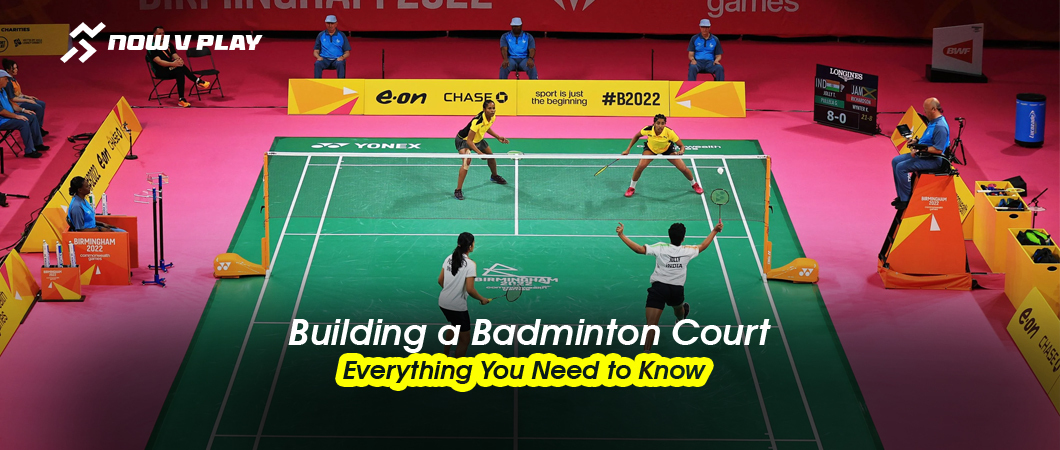
A badminton court is a rectangular area that must adhere to specific measurements and markings to ensure fair play. According to BWF regulations, a standard court measures 13.4 meters in length and 6.1 meters in width for doubles, with narrower markings for singles matches. The layout includes a net placed at the center, dividing the court into two equal halves. Each half is further segmented into service areas, baselines, and sidelines. Understanding this structure is crucial before starting construction. If the layout is off even slightly, it could affect gameplay significantly. Accurately marked lines with the correct materials ensure longevity and compliance with official standards. Whether indoor or outdoor, precision in layout defines a functional badminton court.
Indoor vs. Outdoor Badminton Courts: Which is Better?
Choosing between an indoor badminton court and an outdoor badminton court depends on your needs, budget, and location. Indoor courts offer protection from weather, better lighting control, and year-round play. They’re ideal for professional settings and consistent gameplay. However, they often require a higher budget due to roofing, flooring, and ventilation costs. Outdoor badminton courts, on the other hand, are budget-friendly and more accessible but are affected by rain, wind, and sunlight, which can disrupt play. They’re great for recreational use or in locations with mild climates. Evaluating your intended usage, maintenance capacity, and climate is essential before deciding which type of badminton court suits you best.
Site Selection for Your Badminton Court
The success of your badminton court construction starts with smart site selection. Whether you’re building indoors or outdoors, choose a flat and level area with enough space to accommodate the court dimensions and run-off zones. Outdoor sites should offer protection from excessive wind and direct sunlight. Shade trees can help, but be cautious of falling debris. For indoor setups, consider ceiling height—preferably at least 7 meters to allow full racket swings. Proximity to power sources for lighting and easy access to the court are also important. Drainage is crucial for outdoor courts to prevent water pooling. Choosing the right site ensures long-term durability and player satisfaction on your badminton court.
Essential Materials and Surface Types for a Badminton Court
When constructing a badminton court, the surface type plays a critical role in performance and injury prevention. Common flooring options include synthetic mats, wooden floors, acrylic, or PU surfaces. Wooden floors are preferred for professional indoor courts due to their shock absorption and bounce quality. Outdoor courts often use asphalt or concrete with acrylic coatings for durability. Synthetic mats are a popular choice for indoor amateur courts thanks to their affordability and easy maintenance. Anti-skid and anti-glare properties are essential in any surface type. Investing in high-quality materials ensures better grip, longer court life, and a superior playing experience for anyone using your badminton court.
Step-by-Step Guide to Constructing a Badminton Court
Constructing a badminton court involves multiple phases, each requiring precision and planning. First, level the ground and ensure a strong foundation using compacted soil or concrete. Next, mark the boundaries using chalk or paint based on official dimensions. Install posts and set up the net at a height of 1.55 meters at the edges and 1.524 meters in the center. Choose your surface material and lay it down securely. For indoor courts, install shock pads and top flooring layers. Final steps include installing proper lighting, ventilation (for indoor courts), and ensuring smooth transitions between different sections. Hiring experienced contractors can streamline your badminton court construction and deliver professional results.
Lighting and Ventilation Considerations for Indoor Badminton Courts
For an indoor badminton court, proper lighting and ventilation significantly enhance the playing experience. Lighting should be uniformly distributed across the court, avoiding shadows and glare. Use high-intensity LED lights mounted 7–8 meters above the court to reduce reflection and improve visibility. A minimum of 500–750 lux is recommended for recreational play and over 1000 lux for professional use. Ventilation is equally important to maintain air quality and regulate temperature. Install exhaust fans or HVAC systems depending on your space size. Stuffy or humid conditions can not only affect gameplay but also reduce the court’s longevity. Investing in these features adds long-term value to your indoor badminton court.
Must-Have Equipment and Accessories for a Badminton Court
A fully equipped badminton court needs more than just a net and some rackets. Essential accessories include net posts, boundary tape, shuttlecock feeders, seating benches, scoreboards, and court-side storage. For indoor courts, invest in non-slip mats, protective wall padding, and proper signage. Outdoor courts may require portable net systems and waterproof covers. Don’t overlook safety equipment like first aid kits and fire extinguishers, especially in public or professional setups. High-quality accessories not only improve functionality but also enhance the player experience. Whether for home use or a sports complex, these additions ensure your badminton court stands out in both safety and performance.
Maintenance Tips to Keep Your Badminton Court in Top Shape
Regular maintenance is vital to prolong the life of your badminton court and ensure safe play. Sweep or mop the surface regularly to prevent dust buildup, especially on indoor wooden or synthetic floors. For outdoor courts, remove leaves and debris that could cause slipping. Inspect net posts and tension weekly. Repaint lines as they fade to maintain visibility and compliance with regulations. Check for cracks, warping, or moisture damage, particularly after extreme weather. Schedule a professional cleaning and resurfacing every few years based on court usage. Preventive care not only saves costs in the long run but also keeps your badminton court ready for peak performance year-round.
Legal and Zoning Considerations for a Badminton Court Project
Before breaking ground on a new badminton court, check with your local municipality for necessary permits and zoning laws. Residential areas may have restrictions on noise, lighting, and operating hours for sports facilities. You might need building permits for structures like indoor courts or fencing. For commercial ventures, consult with a legal expert about liability waivers and insurance coverage. Ignoring legalities could lead to costly fines or forced deconstruction. Having all paperwork in place gives you peace of mind and a smooth building process. Make sure your badminton court construction aligns with all local and state regulations before proceeding.
Exploring Badminton Courts in Lahore: A Growing Trend
The popularity of badminton courts in Lahore has seen a significant rise, with new facilities emerging across the city. From elite sports complexes like Punjab Sports Board venues to community-focused courts in local gyms, Lahore offers a wide range of options for both amateur and professional players. Many of these courts are indoor, equipped with synthetic flooring, LED lighting, and modern amenities to support competitive play. The increasing demand has also led to private badminton court construction in schools, housing societies, and fitness clubs. Whether you’re training for tournaments or simply playing for fitness, Lahore’s growing badminton scene reflects the city’s passion for the sport and its commitment to active lifestyles.